30 September 2025 At a high-level UN conference in New York, global leaders renewed urgent calls to end the suffering of the


Refugee
 By Abid
October 24, 2025
By Abid
October 24, 2025
Rohingya Plight in Myanmar: A Test for Humanity
By Abid
October 24, 2025
30 September 2025
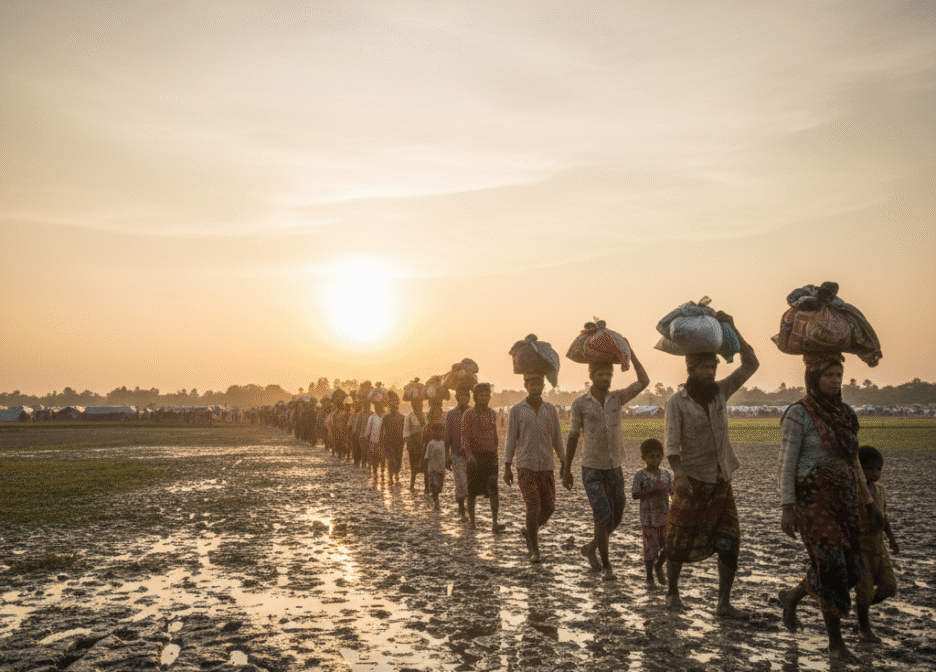
At a high-level UN conference in New York, global leaders renewed urgent calls to end the suffering of the Rohingya Muslims in Myanmar — a crisis that continues to deepen eight years after the mass exodus of 2017.
More than a million Rohingya refugees remain stranded in Bangladesh, while countless others endure life-threatening conditions inside Myanmar’s Rakhine State, where violence, forced recruitment, and starvation persist.
UN officials described the situation as one that has “trampled on human rights, dignity, and safety” and warned it poses a threat to regional stability. The Secretary-General’s message urged three key steps: protection of civilians, guaranteed humanitarian access, and renewed investment in refugee support.
A Crisis That Should Put the World to Shame
UN General Assembly President Annalena Baerbock called the crisis “a test for humanity,” noting that over five million Rohingya continue to suffer displacement, hunger, and statelessness. She highlighted that more than 800,000 Rohingya children remain out of school in refugee camps such as Cox’s Bazar.
Humanitarian aid agencies warn of dangerously low funding levels, with the 2025 Rohingya Response Plan only 12 percent funded — leaving refugees increasingly desperate and vulnerable.
Voices from the Rohingya Community
Activist Wai Wai Nu, founder of the Myanmar Women’s Peace Network, emphasized that atrocities have not stopped since 2017 — instead, they’ve intensified. She called for targeted sanctions, cross-border humanitarian corridors, and accountability for crimes committed by both the Myanmar military and armed groups.
Similarly, Rofik Husson, founder of the Arakan Youth Peace Network, recounted harrowing stories of forced conscription and mass killings, urging the UN to establish an internationally supervised safe zone in northern Rakhine.
A Call for Justice and Lasting Peace
UN Special Envoy Julie Bishop warned that Myanmar’s escalating conflict, fueled by the 2021 military coup, shows no sign of easing. Without a unified peace process or accountability, she said, the Rohingya crisis will continue.
Despite grim realities, speakers expressed hope that the international community can still act with courage and compassion. “The Rohingya have survived eight years of hardship,” Baerbock concluded. “Their resilience is extraordinary. Our response must match it.”